
Blog
Rebuilding the Voice: Why Telephone Fundraising Still Works, Once We're Welcome
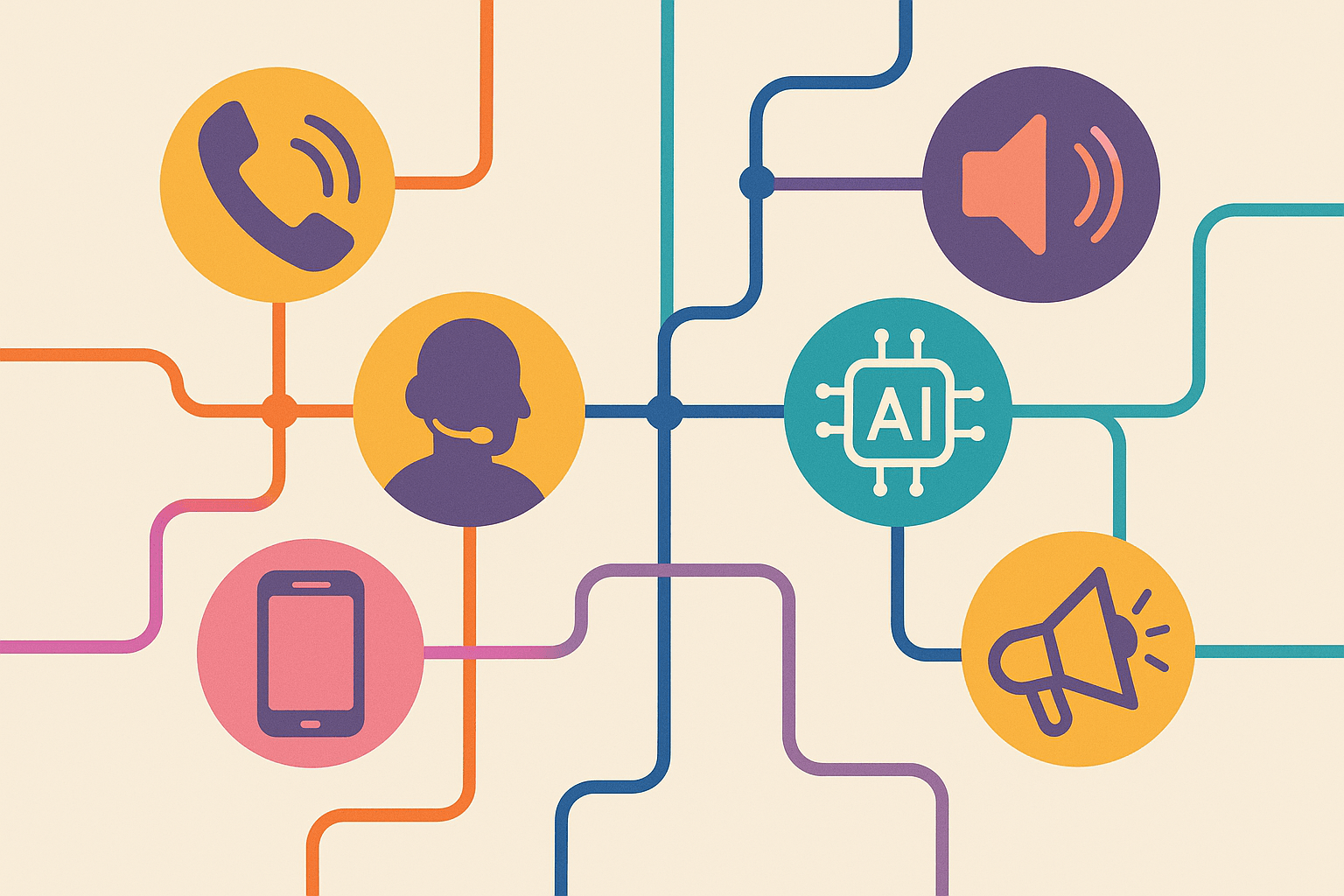
For a long time, telephone fundraising was the workhorse of alumni and supporter engagement. Then, slowly, it began to feel harder. Fewer people answered, campaigns struggled to reach the right audience, and many teams began asking whether the telephone still had a place at all.
When someone does pick up, though, the outcomes remain extraordinary: real conversations, generous responses, genuine connection. The problem is not that the call doesn’t work, it’s that we’ve stopped earning the right to be heard.
Why I’m Talking About “Voice” Instead of “Telephone”
The term voice encompasses a broader landscape than just phone calls. Today’s voice communication includes voice notes on WhatsApp, podcasts, voice-enabled AI assistants, and other conversational media. Rather than treating the telephone as an isolated tool, framing fundraising within the wider “voice ecosystem” shows that phone contact is one strand in a much larger web of conversational media.
The challenge is no longer technological, it’s about trust and timing: how to make our voices welcome again.
Why People Stopped Picking Up
A 2019 Zipwhip survey found that 87% of people routinely ignore unknown numbers, and nearly 90% don’t answer unless they recognize the caller. In the UK, landline use has plummeted while mobile dominates. Mobile phones are personal and easy to screen, and the old courtesy of answering has largely disappeared.
Yet when calls are answered, they perform brilliantly. Research consistently shows calls convert well, run longer, and create deeper emotional engagement than other channels. The conclusion is clear: the channel works, it’s just narrower.
Why People Don’t Answer, And What That Really Means
Voice contact has become reserved for high-trust relationships: family, friends, health providers. A call from a charity or school now feels intrusive unless the institution has already earned the space to speak. When voice is expected, when recipients recall who is calling and why, everything changes. The conversation flows, and so does generosity.
The core problem with modern telephone fundraising isn’t the call itself, but the expectation of the call.
Why Voice Still Matters
Voice hasn’t disappeared, it’s changed shape. In the UK, 42% of adults listened to a podcast last month, with listeners averaging more than seven hours per week. Radio remains powerful: 82% of US adults listen weekly, and 84% in the UK, more than use social media on their phones.
People still love listening to voices. They just want to do it on their own terms.
Voice Is Everywhere Now
Beyond podcasts and radio, conversational voice permeates digital life. WhatsApp voice messages are perfect examples: millions send them daily because speaking is easier and more natural than typing. Instagram, Facebook Messenger, Telegram, and LinkedIn all support voice messages.
Voice-based AI systems are normalizing conversation with unfamiliar voices. ChatGPT’s real-time voice mode, Siri, Google Assistant, and Alexa demonstrate that people are already comfortable talking to systems, not just people. In 2024, OpenAI made real-time voice interaction widely available, and uptake was immediate.
The gap between listening to a podcast and picking up the phone is smaller than it appears. People already hear unfamiliar voices, interact with AI, and respond on their own schedule. The only thing missing is trust.
How We Can Rebuild That Trust
If we treat the phone call not as an interruption but as part of a wider voice experience, everything shifts.
A call from a fundraiser becomes just one instance of conversational audio. But to be welcome, it must feel familiar. This means appearing earlier in the voice ecosystem through gentle, non-ask content and low-friction contact, so that when a live call happens, it’s not a shock.
In most donors’ lives, a university or school is one of the few institutions that doesn’t use voice at all unless it’s asking for money. That’s the problem.
We can fix this by using voice more often, for more reasons: short WhatsApp updates, quick voicemail messages, or short thank-you clips. The goal is not continuity with a single caller, it’s continuity with the medium.
Training the Ear: Voicemail and Recognition
Traditional advice says don’t leave voicemails. But phones now transcribe them automatically. Even if someone doesn’t listen, they read the transcript: “Hi, I’m Jamie, I’ll be making alumni calls next week…” That short text primes recognition, making the next call feel less cold.
Voicemail becomes a form of training: gentle exposure to tone and familiarity. We can call more regularly, even using automated agents when student callers aren’t available.
AI-Driven Voice Touchpoints
New AI tools make it possible to create interactive voice experiences that feel natural and personal. This fits with how people already behave: speaking to voice assistants, chatting with bots, or responding to AI system prompts.
An AI-led voice interaction (for example, a message letting donors press 1 to hear a student story or 2 to request a callback) no longer feels alien. It feels efficient, normal, and useful. These moments don’t replace human contact; they prepare for it. They normalize voice and make it feel relevant again.
We can schedule these AI touchpoints monthly, blending human and automated voice to keep the channel alive even when callers aren’t available. That rhythm (short, friendly, predictable) builds trust faster than a once-a-year call.
Letting Supporters Opt In to Speak with AI
One promising opportunity is letting alumni choose to be called by an AI rather than a person, especially for simple tasks like updating contact details or confirming communication preferences.
Imagine an alumnus receiving an email or WhatsApp message: “Would you like to update your details via a quick call with our voice assistant? It only takes a minute.”
They click a link, get a friendly AI voice from the institution they know, and talk naturally: confirming their address, checking whether they’d like event updates, or leaving a short message for the head of alumni relations.
It’s low-stakes, useful, and entirely consent-based, which changes the dynamic completely. Instead of asking for permission after intruding, we invite participation in advance. The result is cleaner data, higher engagement, and a warmer relationship with the institution’s voice.
Over time, these AI calls could extend beyond admin: delivering impact updates, anniversary thank-yous, or voice-based stories. The key is that people opt in. They know who’s calling, they expect it, and they value the interaction.
Restoring Trust Through Caller Identity
The hardest problem in rebuilding trust is the perception that unknown numbers equal spam or fraud. Hiya’s Global Phone Spam and Fraud Report (H1 2024) found that nearly a third of all unknown calls worldwide were unwanted, with 28% in the UK flagged as spam and 3% as fraud. People don’t dislike speaking, they just don’t trust who’s speaking to them.
Hiya’s Branded Call product (part of its Connect platform) tackles this by letting organizations display their name, logo, and a short call reason on recipients’ screens. It replaces anonymity with context. The company reports that this reduces blocking and increases answer rates, citing data showing that “92% of consumers are more likely to answer recognised callers.”
Some clients report significant gains: a financial services firm saw 27% longer calls, OppFi saw a 25% higher answer rate, and a used-car retailer improved right-party contact rates by 53%. These figures come from Hiya’s own reporting, but the trend is clear: recognition drives engagement.
Hiya’s system also tracks spam complaints and helps organizations maintain clean reputations, vital in a world where 20 billion calls were flagged as spam in just six months.
For fundraisers, this isn’t a marketing gimmick. It’s part of restoring trust to the voice channel. When donors see who’s calling and why, they’re far more likely to pick up.
Adapting to Different Institutional Realities
Large universities that run year-round student or alumni programmes can embed voice throughout the year: occasional updates, low-stakes calls, and periodic campaigns. Voice becomes as routine as email, but richer.
Schools or Oxbridge colleges, with shorter campaign windows, can use voice differently: priming behaviour before the campaign, leaving voicemails during it, and following up with thank-you messages afterward. Voice here is about readiness, not continuity.
Either way, the principle is the same: build expectation, not interruption.
Different Markets, Same Opportunity
US and UK contexts differ, but voice works under the same conditions everywhere, when it’s trusted and timely.
In the US, research continues to show its power:
- First-time donors who get a thank-you call within 48 hours are four times more likely to give again (McConkey-Johnston International).
- When a board member calls a new donor, their next gift increases by about 39% (Cygnus Research, Penelope Burk).
- Making more than one call within 90 days of a gift increases donor retention to roughly 58% (Bloomerang).
- 20% of donors aged 18 to 29 and 18% of those aged 30 to 44 have donated in response to a nonprofit’s phone call (NeonOne).
In the UK, calling often happens in short bursts, sometimes once a year, with changing student teams. Even so, when calls are expected, supported by earlier voice contact, they perform just as strongly.
Voice works when it’s welcome.
Rebuilding the Culture of Voice
Whether you’re calling year-round or once a term, the priority is to rebuild trust in the medium. That means:
- Making prompt thank-you calls, especially for first gifts.
- Leaving voicemails that build recognition.
- Using voice-first communications (WhatsApp clips, AI interactions) as a regular touchpoint.
The goal is to make voice normal again.
Thanking Days: Voice at Its Warmest
In many institutions, the only time donors hear a voice from their university or school is during a fundraising campaign. It’s understandable (calling takes effort, and resources are limited), but it creates a skewed pattern. Every time a donor picks up, they expect to be asked for money.
A Thanking Day (or Thanking Week) flips that completely. It’s a structured, voice-led event where you reach out to supporters purely to express gratitude: no ask, no hidden agenda. The idea borrows from the energy of a Giving Day but channels it into stewardship. It’s one of the simplest, most effective ways to normalize voice contact and build goodwill ahead of future appeals.
How it Works
You pick a day or short window, choose a segment of donors or volunteers, and coordinate a small team (students, staff, or even governors) to make contact. The format can vary, but the principles are simple:
- Students, especially those supported by bursaries or scholarships, can thank donors whose gifts have made their studies possible.
- Academic or professional staff can share how philanthropy has shaped their work or department.
- Leadership figures (Heads, Principals, Vice-Chancellors) can record short messages of appreciation for long-standing supporters, governors, or major donors.
Those thank-yous can take several forms:
- Live calls, using existing telephone campaign software or VOIP platforms. If the donor answers, it’s a personal, uplifting conversation.
- Voicemails, when they don’t. A 20-second message, warmly delivered, is often more memorable than an email.
- Recorded voice notes or video clips, sent via WhatsApp, SMS, or email. These can be personalised or semi-personalised and scale surprisingly well.
- Written thank-yous, when voice isn’t appropriate: cards, notes, or personalised emails.
Easy to Run, Easy to Scale
Compared to an appeal, a Thanking Day is refreshingly low-pressure:
- Low-cost: no payment processing or complex scripting.
- Low-supervision: once briefed, students or staff can call from their desks, homes, or offices.
- Low-stakes: with no ask, there’s no anxiety about rejection, ideal for first-time callers.
- Inclusive: it involves people who might not usually join a fundraising campaign (postgrads, researchers, administrative staff), widening ownership of philanthropy.
Because of this flexibility, it can take many forms. Some institutions run one major Thanking Day a year, making it a visible cultural event. Others build it into the rhythm of stewardship, running a small Thanking Week each term or quarter. You can even distribute thank-you messages continuously through the year, using the same tools you’d use for a calling campaign or broadcast messaging.
Why It Matters
The effects compound over time:
- It gives donors another warm, voice-based contact during the year, softening the ground for future fundraising.
- It rebuilds trust in phone contact: not every call becomes synonymous with an ask.
- It brings more of the institution into donor stewardship, reminding supporters that philanthropy benefits real people.
- It generates authentic content (quotes, clips, soundbites) that can feed back into marketing, reporting, and future campaigns.
In practice, Thanking Days often become a highlight of the calendar. They’re energising, inclusive, and morale-boosting for everyone involved. And strategically, they’re one of the most effective ways to re-establish voice as something donors look forward to hearing, not something they brace against.
Where to Start
If you want to test this, start light:
- Leave or send a few voicemails and track recognition and response.
- Send short audio updates before your next campaign and compare answer rates.
- Try an AI voice flow for updates or call bookings.
- Run a Thanking Day.
You’ll learn quickly how voice shifts perception.
Final Thoughts: Voice Isn’t Broken
Voice fails when it’s used bluntly: once a year, always asking, never giving. But when we use it as a continuous, welcome conversation, supported by familiar tones and consistent presence, it still delivers unmatched results.
People already live in an audio world. They trust voice when it feels familiar, kind, and expected.
Our job now is simple: earn the right to be heard. When we do, voice still works beautifully.